August 2026 – Shincha from Shirakawa

On summer nights in Gifu Prefecture (岐阜県), fishing fires glow on the river. This month's tea comes from the mountains of the same prefecture: a Shincha (新茶) from Masubuchien (ますぶち園), in the town of Shirakawa (白川町). We know the farm well: it sent us a Tsuyuhikari (つゆひかり) back in 2021.
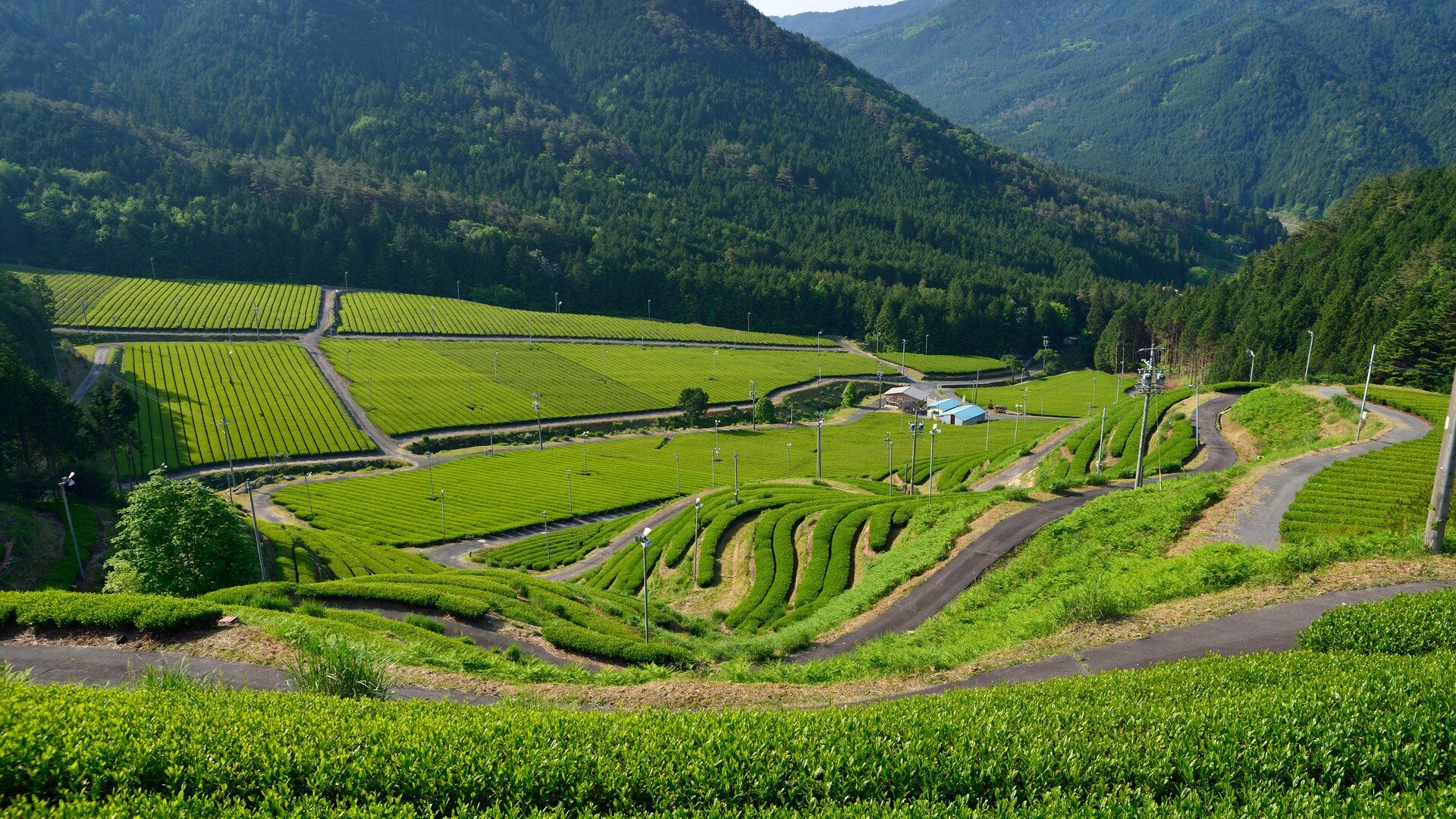
Photo by courtesy of the tea producer: Masubuchien (ますぶち園)
Shirakawa, a Mountain Tea
The town of Shirakawa is not Shirakawa-gō (白川郷), the village of thatched farmhouses in the north of the prefecture. It lies further south, where Shirakawa tea (白川茶) grows on slopes along the Shirakawa, Kurokawa and Akagawa rivers. This rare tea makes up less than 1% of the tea sold in Japan. Mists rise from the rivers in the morning and evening, and the nights are much cooler than the days, so the leaves grow slowly. The result is a mellow tea, rich in umami, with little bitterness or astringency.
This Shincha, sold as "Shun" (旬, "in season"), was picked in May. It is a blend: Masubuchien's tea master combines leaves from the farm's own Masubuchi garden (鱒渕茶園) with teas chosen from across Shirakawa, for a fine balance of umami and aroma.
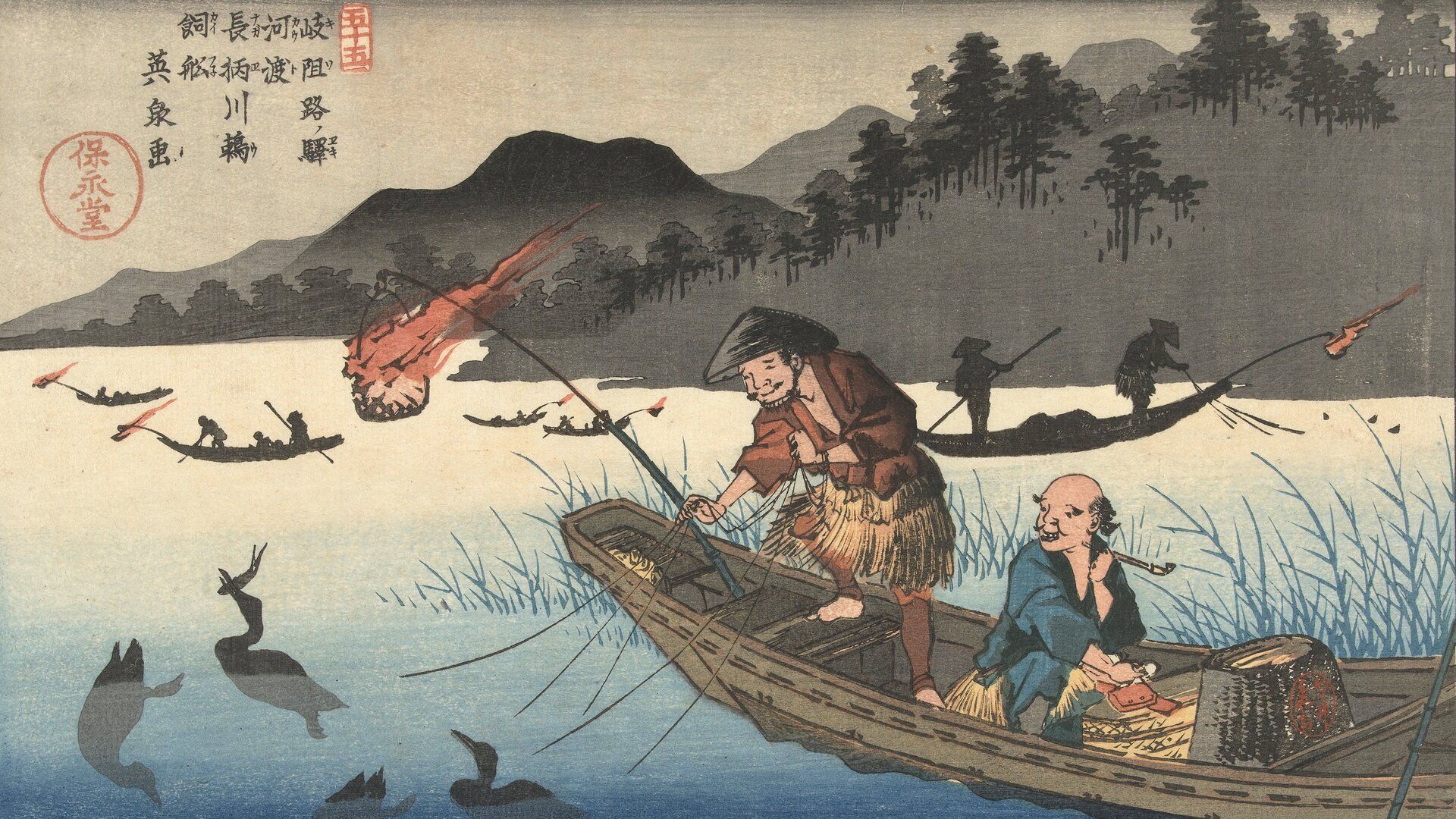
Cormorant fishing boats on the Nagara River at Kōdo by Keisai Eisen, public domain (cropped from original).

Ukai, Fishing by Firelight
After dusk in Gifu City, wooden boats drift down the Nagara River (長良川), each with a basket of burning pine hanging from its bow. On board, a fishing master in a straw skirt handles ten to twelve cormorants on leashes. The firelight startles the ayu (鮎), or sweetfish, and the birds dive to catch them. A snare at the base of each bird's throat lets it swallow small fish but not large ones, and the master makes the bird cough them up.
Cormorant fishing, ukai (鵜飼), has been practised here for more than 1,300 years. The masters, the ushō (鵜匠), pass the craft down within their families and hold an official post at the Imperial Household Agency: on eight nights each season, their catch goes to the Imperial Palace. The boats go out every night from May 11 to October 15, except on the night of the harvest moon and when the river runs high.
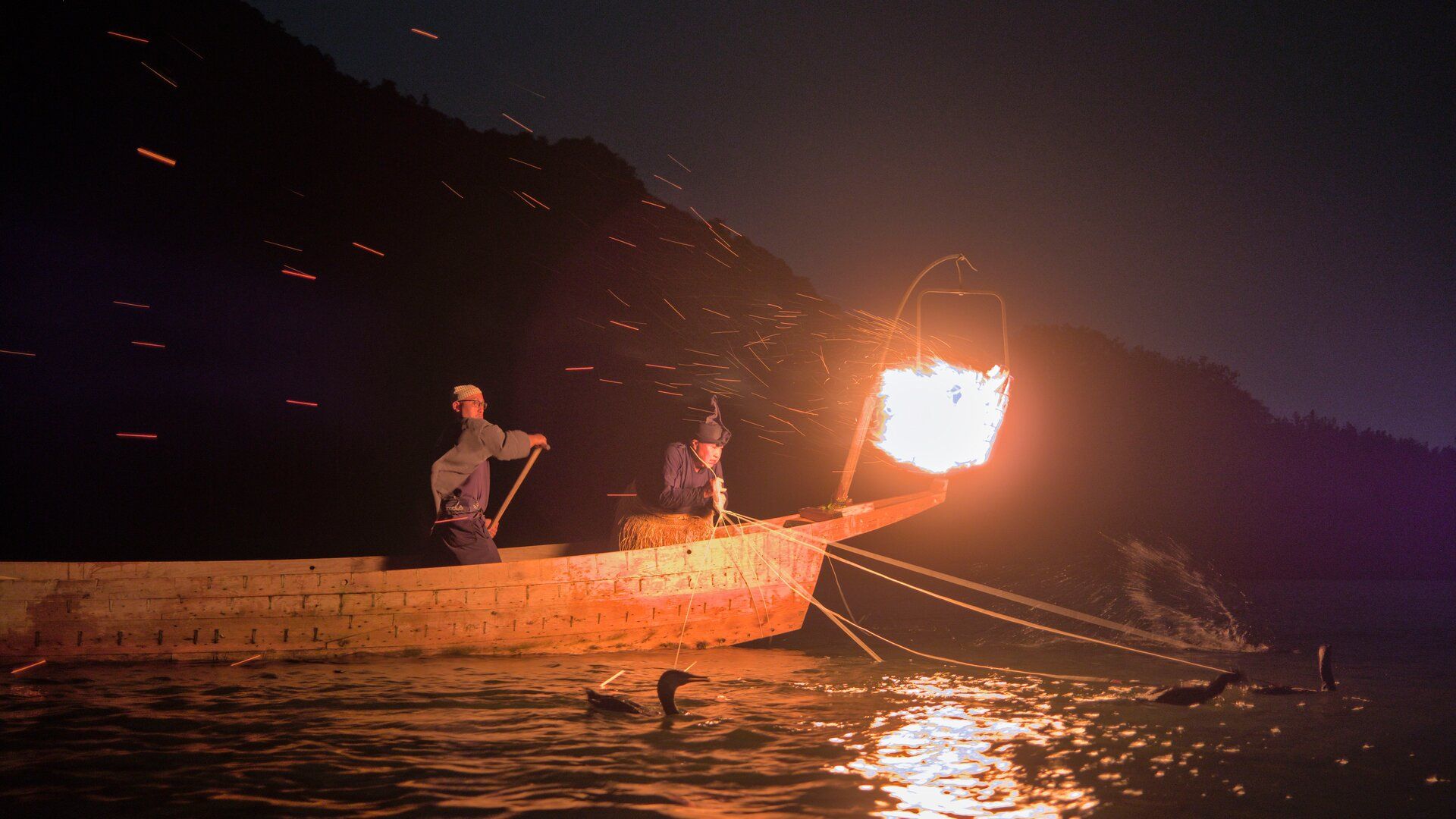
Cormorant fishing on the Nagara River by Ludger Heide, used under CC BY-SA 4.0 (cropped from original, shared under the same license).

Charlie Chaplin, who came to watch twice, is said to have kept repeating one word: "wonderful". The poet Bashō (芭蕉) watched the boats in 1688 and caught the whole night in a haiku: "Omoshirōte / yagate kanashiki / ubune kana", how thrilling, and how soon sad, the cormorant boats.
Brewing Shincha from Shirakawa
The producer shares a simple ritual for a kyūsu (急須) and three cups.
- Tea leaves: 6 to 7g (about 3 light teaspoons)
- Water: 270ml
- Temperature: 70 to 80°C
- Steeping time: 30 to 60 seconds
Put the leaves in the kyūsu, then bring the water to a full boil, pour it into the three cups and let it cool for about 30 seconds. Pour it gently into the kyūsu, put the lid on and let the tea steep quietly. Then pour a little into each cup in turn, going round until the kyūsu is empty, so that every cup gets the same amount and strength. Soft water, low in minerals, works best.
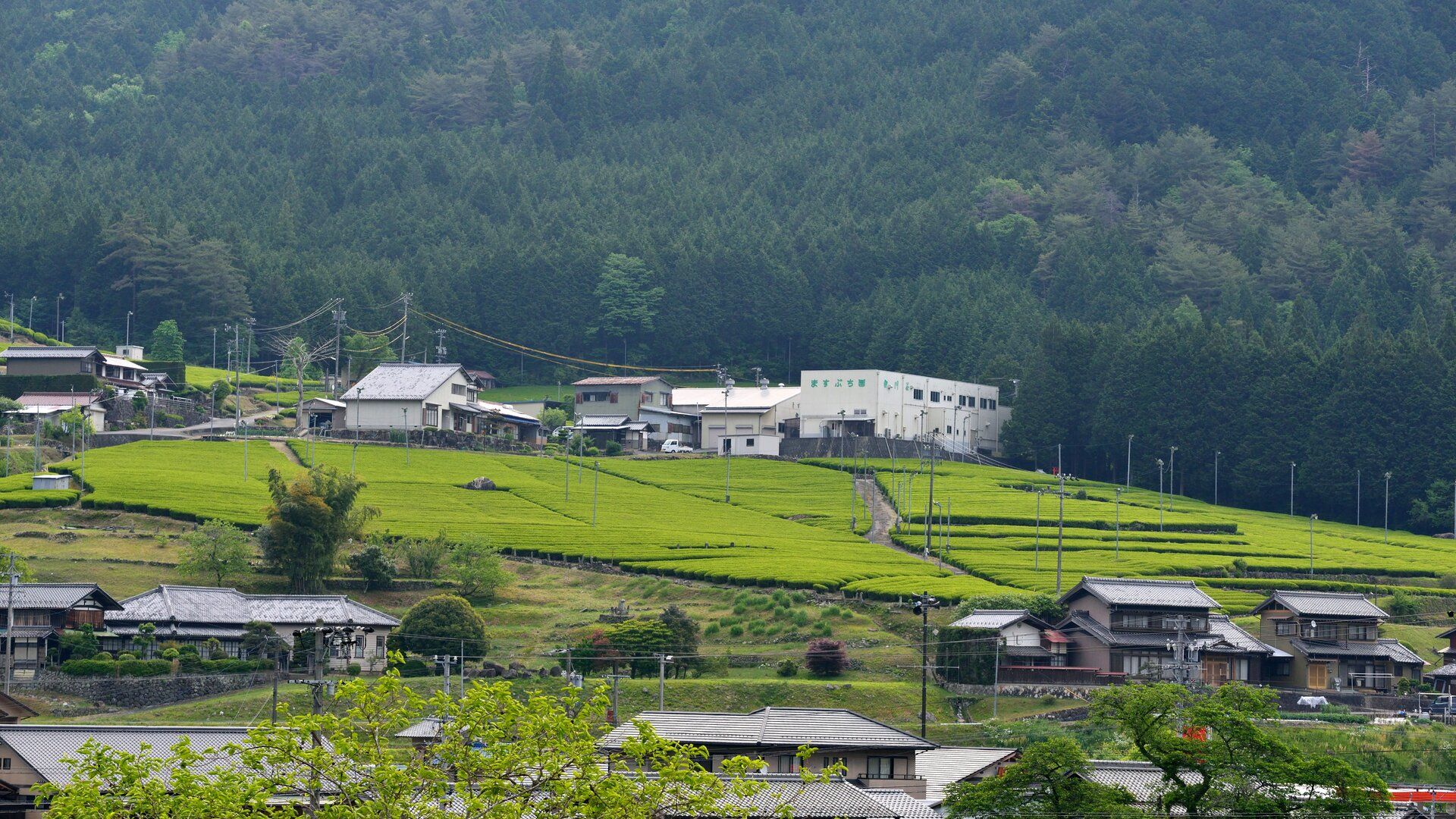
Photo by courtesy of the tea producer: Masubuchien (ますぶち園)
Our own tip: for a second infusion, use slightly hotter water and a shorter steep. On hot August days, you can also cold-brew it: about 10g of leaves in a litre of cold water, three hours in the fridge, then strain.
Enjoy!