April 2026 – Karigane Hōjicha from Mie

We are staying with stems this month. After March's delicate Karigane (雁ヶ音) from Hoshino, our April tea takes the same kind of leaf and puts it through fire: a Karigane Hōjicha (雁ヶ音ほうじ茶) from the prefecture of Mie (三重県). It is the same tea we offered five years ago, in February 2021, and we are happy to bring it back.
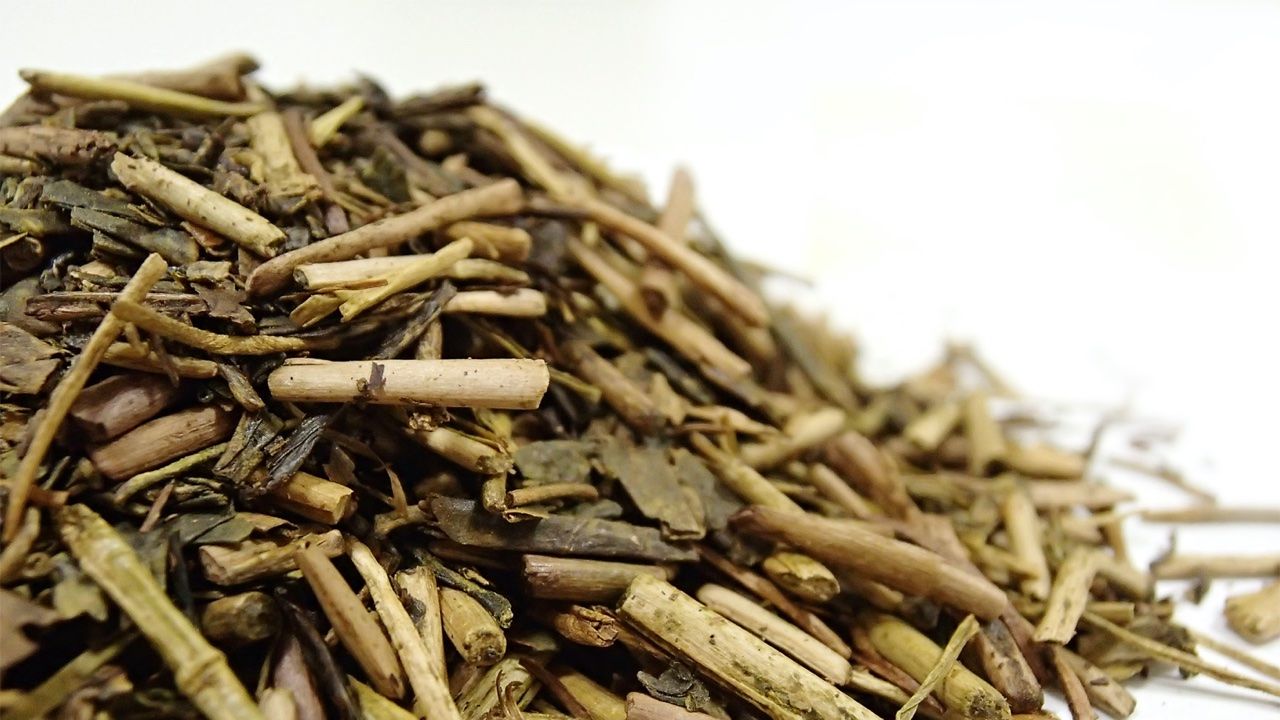
Karigane Hōjicha, a Roasted Stem Tea
Hōjicha (ほうじ茶) literally means "roasted tea." Most Hōjichas roast finished leaves of Sencha (煎茶) or Bancha (番茶) over high heat until they turn a warm chestnut brown. The fire transforms the cup completely: the grassy notes of the original green tea give way to a fragrance of toasted nuts and caramel, the astringency disappears, and much of the caffeine is burned off in the process.
Our April tea is roasted not from leaves but from stems, the same Karigane material we explored last month. Karigane is naturally lower in catechin than the leaves and richer in theanine, so the roast starts from a sweeter, gentler base. The resulting cup is unusually round and soft, with a clean, almost biscuity finish, and very little of the smokiness sometimes associated with Hōjicha.
The tea comes from the district of Taki (多気町) in southern Mie, just west of the city of Ise (伊勢市). Mie is Japan's third-largest tea-producing prefecture, after Kagoshima and Shizuoka.
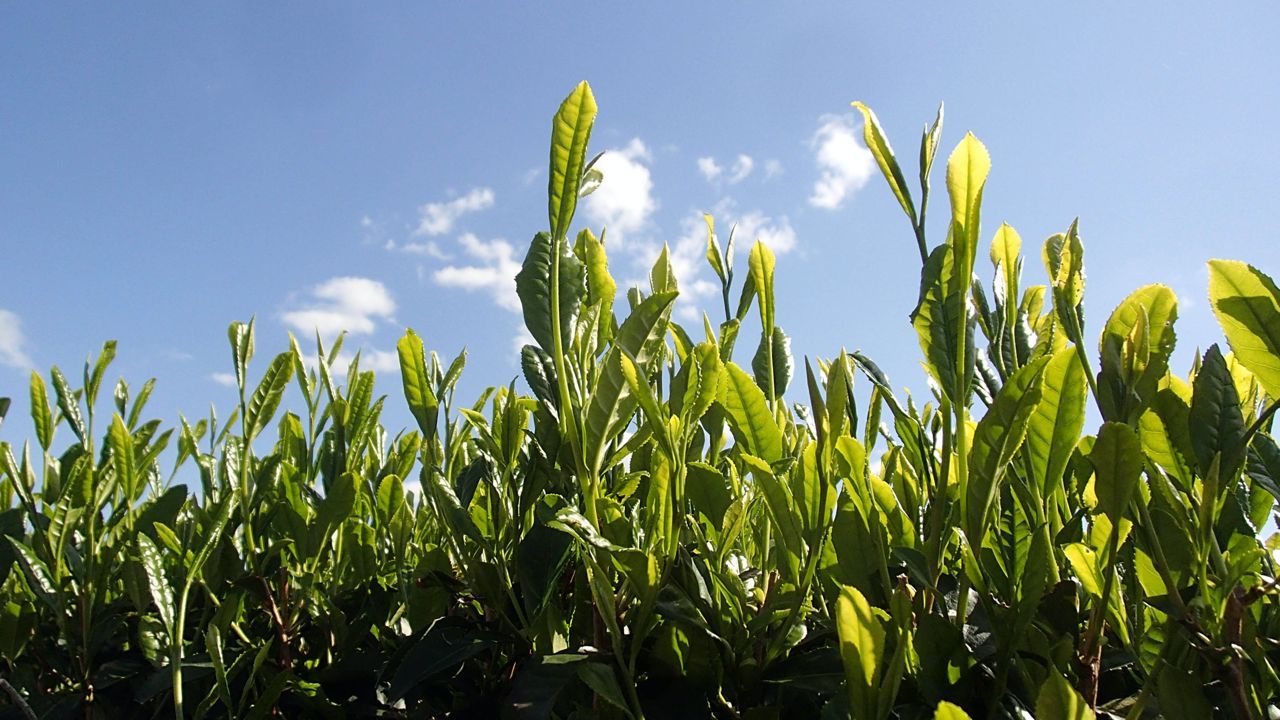
A Tea Born from Frugality
Japanese tea has a long habit of using every part of the plant. Karigane uses the stems. Konacha (粉茶) uses the dust that falls off during sorting, and is the hot tea, known as agari (あがり), that sushi restaurants serve at the end of a meal. Genmaicha (玄米茶) stretches tea with toasted rice. Even the lowest grades of the autumn harvest become Bancha (番茶), the everyday tea of the countryside.
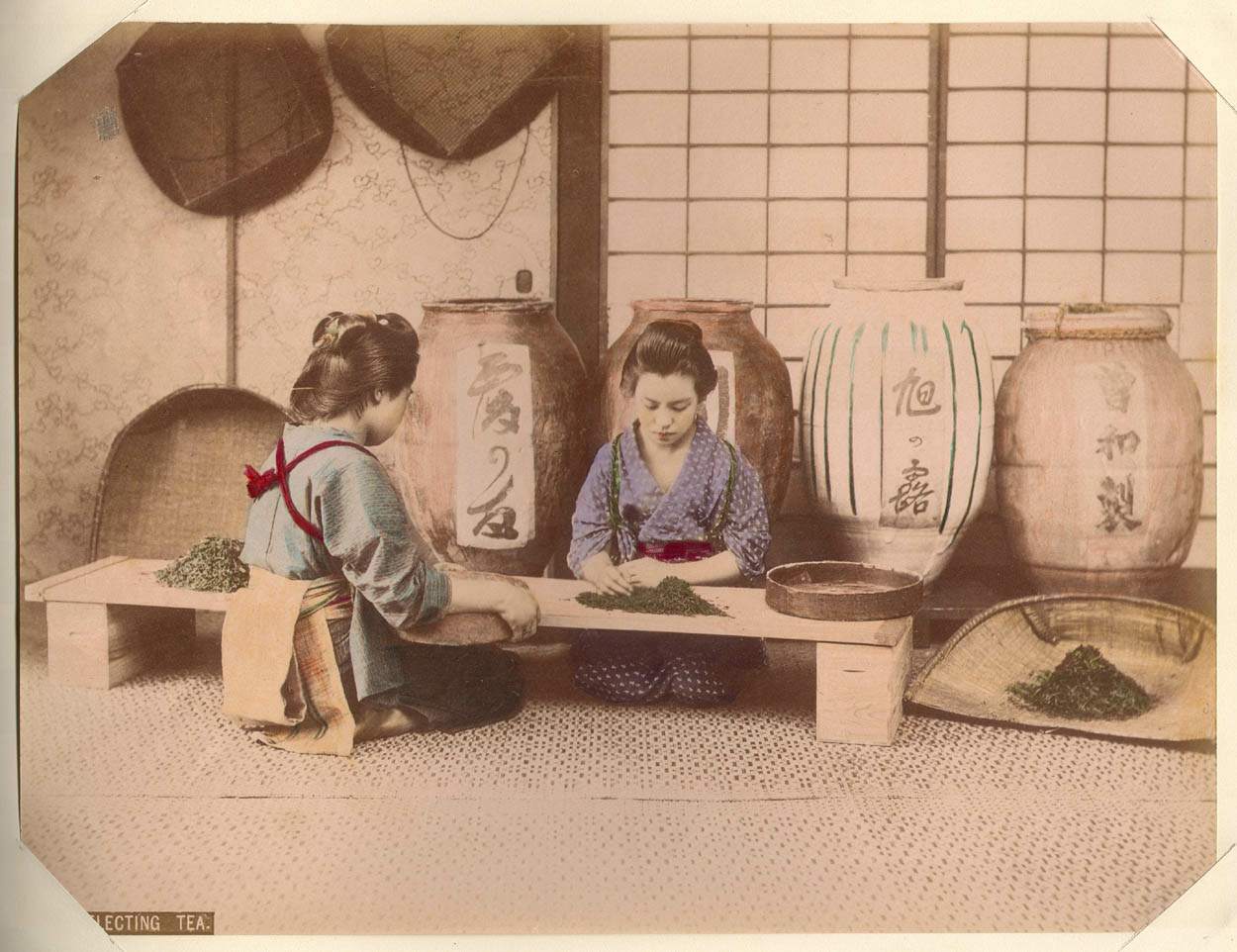
Selecting Tea by Kusakabe Kimbei, public domain.

Hōjicha is the most striking expression of that habit, because it was born from an actual crisis. In the early 1920s, Japan was in recession: exports had weakened after the First World War, the 1923 Great Kantō earthquake had devastated the country's economic heart, and tea merchants in Kyoto found themselves with stocks of plain Bancha they could not sell. One of them tried roasting his unsold leaves over high heat, hoping at least to dry out what was sitting in his warehouse. The fragrance turned warm and toasty, the bitterness disappeared, and Hōjicha was born.
The smoky, caramel-like aroma was unlike anything else on the market. The cup was forgiving, easy to drink with food, and the low caffeine meant it could be served from morning to evening, to children and elders alike. Within a few decades, what had started as a way to save unsold inventory had spread to tea shops across the country and become one of the most familiar teas in Japan. Today you find it in restaurants, in vending-machine bottles, in lattes and ice cream.
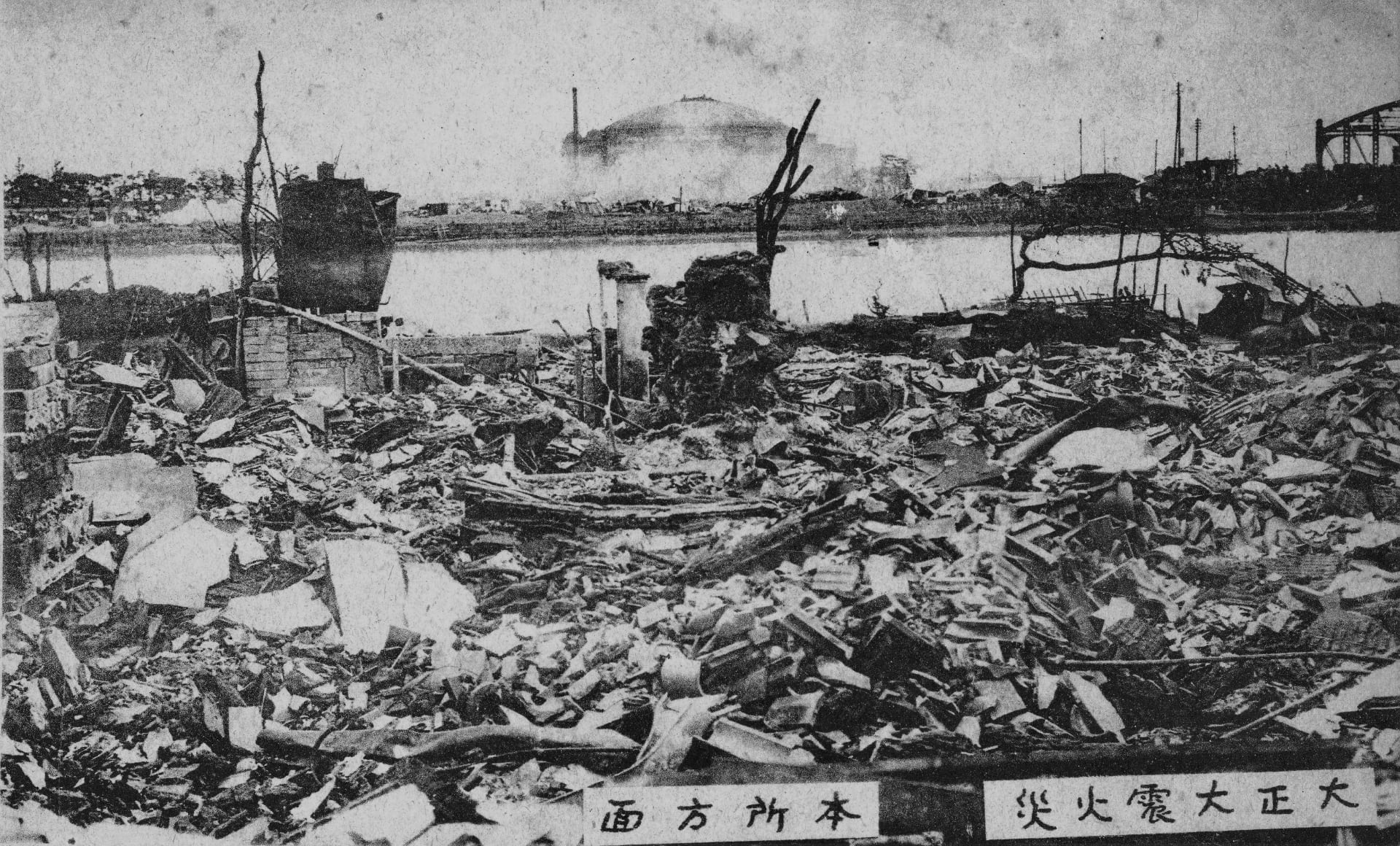
Devastation after the 1923 Great Kantō earthquake, unknown author, public domain.

Brewing Karigane Hōjicha
Hōjicha is the most forgiving of Japanese teas: it asks for hot water and a short steep, and rewards a generous dose of leaves. Adjust to taste:
- Tea leaves: 3g (about 1½ teaspoons)
- Water: 120ml
- Temperature: 90°C or above
- Steeping time: 30 seconds
For a stronger cup, add more leaves rather than steeping longer. The same leaves will reinfuse one or two more times; keep the following steeps very brief, the water just as hot. Hōjicha is also wonderful prepared with milk and a touch of sugar, as a soft alternative to a black-tea latte.
It pairs naturally with food. Try it after a bowl of soba (蕎麦), with a slice of toast and butter, or alongside a piece of dark chocolate; it works with both savoury and sweet.
Enjoy!